 Johnny Cay Tour
Johnny Cay is visited for the color of the water and is often remembered for the iguanas on the trail and the ring of coconut palms. Under that postcard there is a park: a cay with very little land, a reef and a bottom that were already under pressure when Coralina declared it a protected area in 2001. This guide describes the flora and fauna you actually see on a visit, the reef setting, and how to walk the islet without taking—or leaving—what the park is trying to conserve.
📋 In brief
- The cay’s profile is the coconut palms, an inheritance of the archipelago’s coconut economy, with soil more exposed to erosion than the photo suggests.
- There are iguanas loose on the trail: look and photograph from a distance, with no food and without picking them up.
- Most of the park is marine: of the 44 hectares, about 39 are water and reef, not beach.
- Do not bring outside food, do not stand on live coral, and do not take anything from the bottom or the shore.
What vegetation will you see (and why does it matter)?
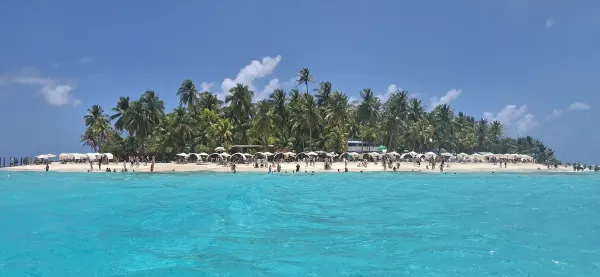
What defines the silhouette, from Spratt Bight and from the boat, is the coconut palm. INVEMAR’s reference study (Vides and Alonso, 2018) reminds us that this image is also an inheritance: on San Andrés, protective forest was historically replaced by monocultures, first cotton and then coconut, and that pattern projects onto the cay. A ring of palms is beautiful and, at the same time, a more fragile soil, more prone to erosion when people walk off the path or cover is lost. That is why the trail exists, and why cutting through any clearing is not a harmless shortcut.
In the declaration, the land portion was described with beach, coral outcrops and a relatively small plant cover (about 1.5 hectares of vegetation at the time of delimitation, plus a little over a hectare of beach). The cay is not a dense forest. It is a low islet, and you walk it in 15 to 20 minutes, as the geography of Johnny Cay sets out.
Are there iguanas and other wildlife? Can you feed them?
Yes, there are iguanas, and they are loose on the trail and near the vegetation, especially in quieter hours. They are part of the visit, not a show. It is forbidden to feed them. It is also a bad idea to pay for a photo in which someone lifts them: it stresses the animal and goes against the rule of not interfering with wildlife. A zoom or a few steps of distance is enough. In the water, inside the buoys and, more densely, at El Acuario, you will see reef and shore fish; we do not promise particular species or “encounters” with rays or turtles, because that depends on the day and the site, not on a script.
⚠️ Ojo
If a promoter offers you “the photo with the iguana” or food “so it comes out better,” say no. The rule is not a whim of the boat: it is the park’s, set out in hours, rules and closures.
What is the reef and the marine part of the park like?
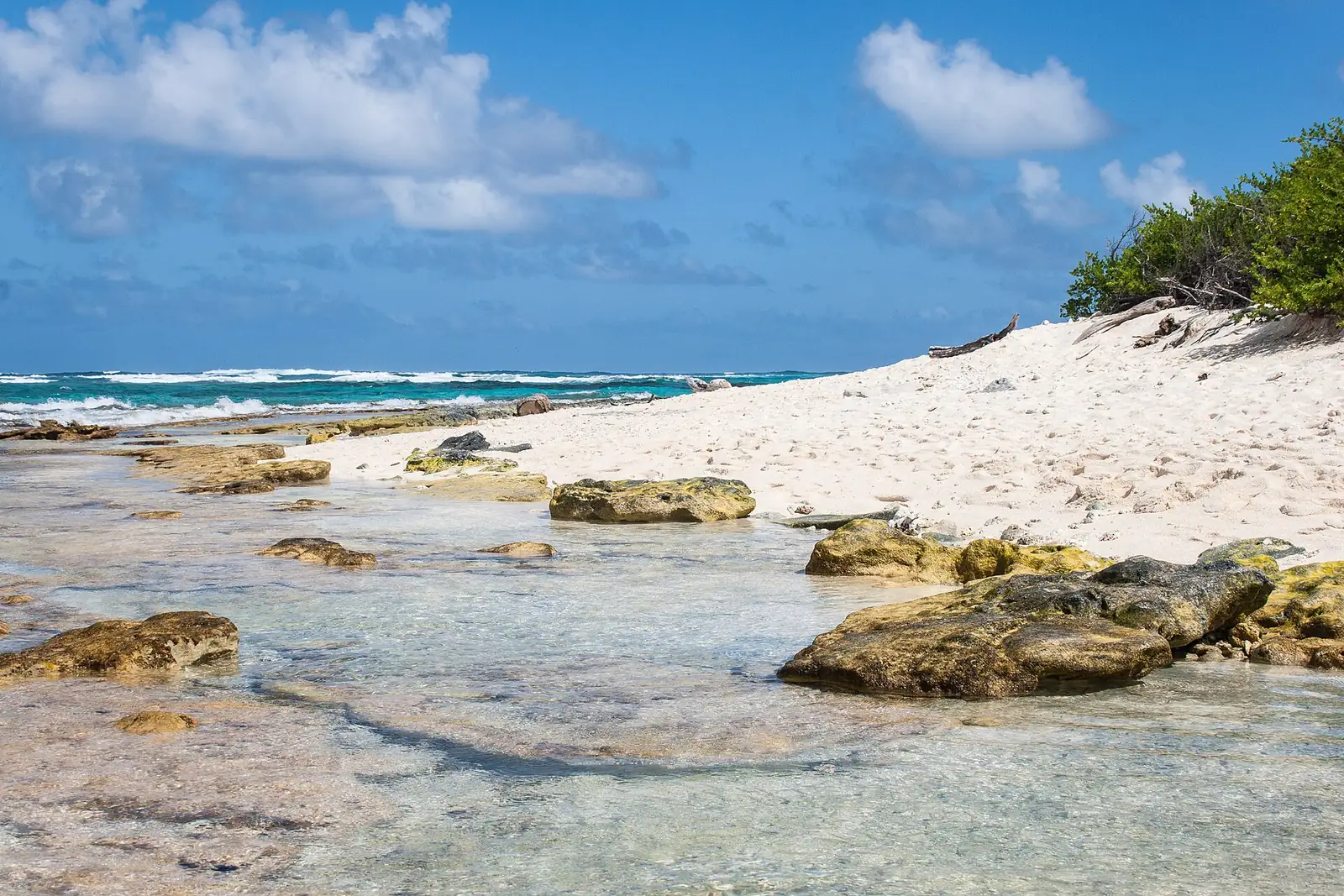
The park is not “the little beach.” Of Johnny Cay Regional Park’s 44.24 hectares, about 38.9 are marine. The reference study describes barrier and fringing reefs, and a submerged coral portion that is small compared with the rest of the bottom. The cay sits in the pre-reef lagoon, by the barrier that protects San Andrés’s north coast. Visitors notice it in three ways: the color of the channel, the sand and grass bottom in the buoyed area, and the coral rock on the far side of the islet.
Snorkeling on that shore is short and honest; the snorkeling that usually shows more life in shallow water is at Haynes Cay and El Acuario, another shoal in the same sea, not a concrete aquarium. That contrast is in snorkeling at Johnny Cay and El Acuario. Everywhere the same rules apply: do not stand on live coral, do not take pieces, do not use fins as a shovel, and do not go in with sunscreen as if the water were a consequence-free pool. The 2001 declaration, Agreement 027, was issued precisely to mitigate damage to those resources, as the history of the cay tells.
What can you do so as not to leave a mark on such a small islet?
Three gestures weigh more than a speech. One: stay on the trail and the swim beach; the soil and plants cannot take shortcuts. Two: do not bring outside food or drinks (Coralina forbids it) and do not leave trash or cigarette butts; a five-hectare cay with a thousand visits a day has no “place to hide” a bottle. Three: treat the iguanas, the fish and the coral as a park, not as a set. The photo, if you care about it, is taken from a distance and with the light we already set out in photos and viewpoints.
💡 Guide’s tip
The cap of 854 people at a time exists because the ecosystem is not elastic. If one day the quota is tight or the park closes for cleanup, it is not a ticket-booth whim: it is the same logic that asks you not to feed the iguana.
| Element | What you will see on a normal visit | How you are asked to behave |
|---|---|---|
| Coconut palms and low vegetation | The cay’s silhouette and shade inland | Do not cut shortcuts or hang from the palms |
| Iguanas | Loose on the trail, more visible in quiet hours | No food, do not pick them up, photograph from a distance |
| Shore and buoys | Sandy bottom, clear water, shore fish | Short snorkel, no standing on coral, inside the buoys |
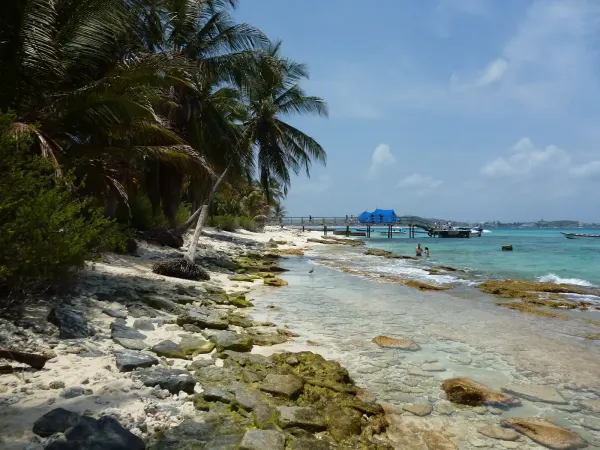
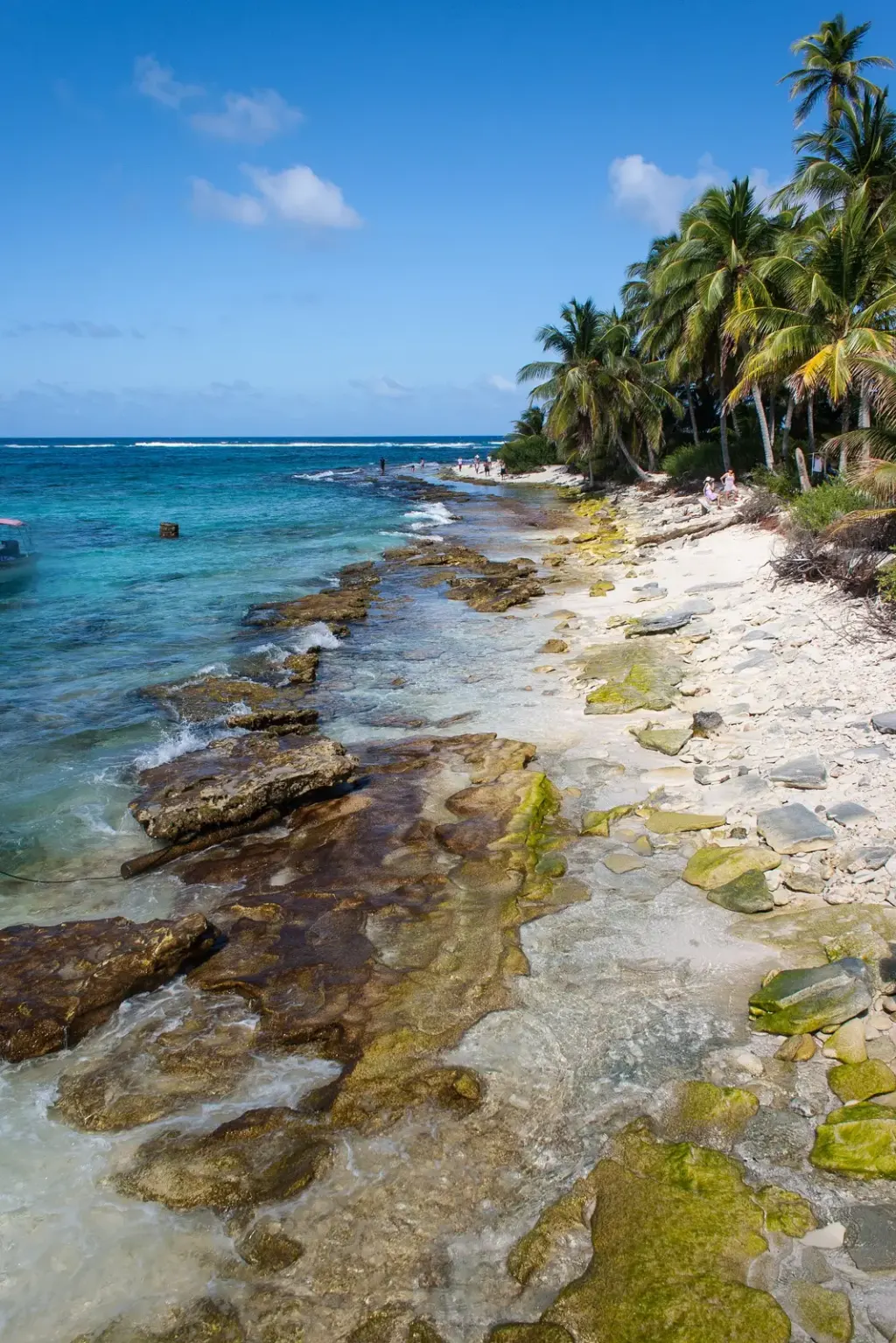
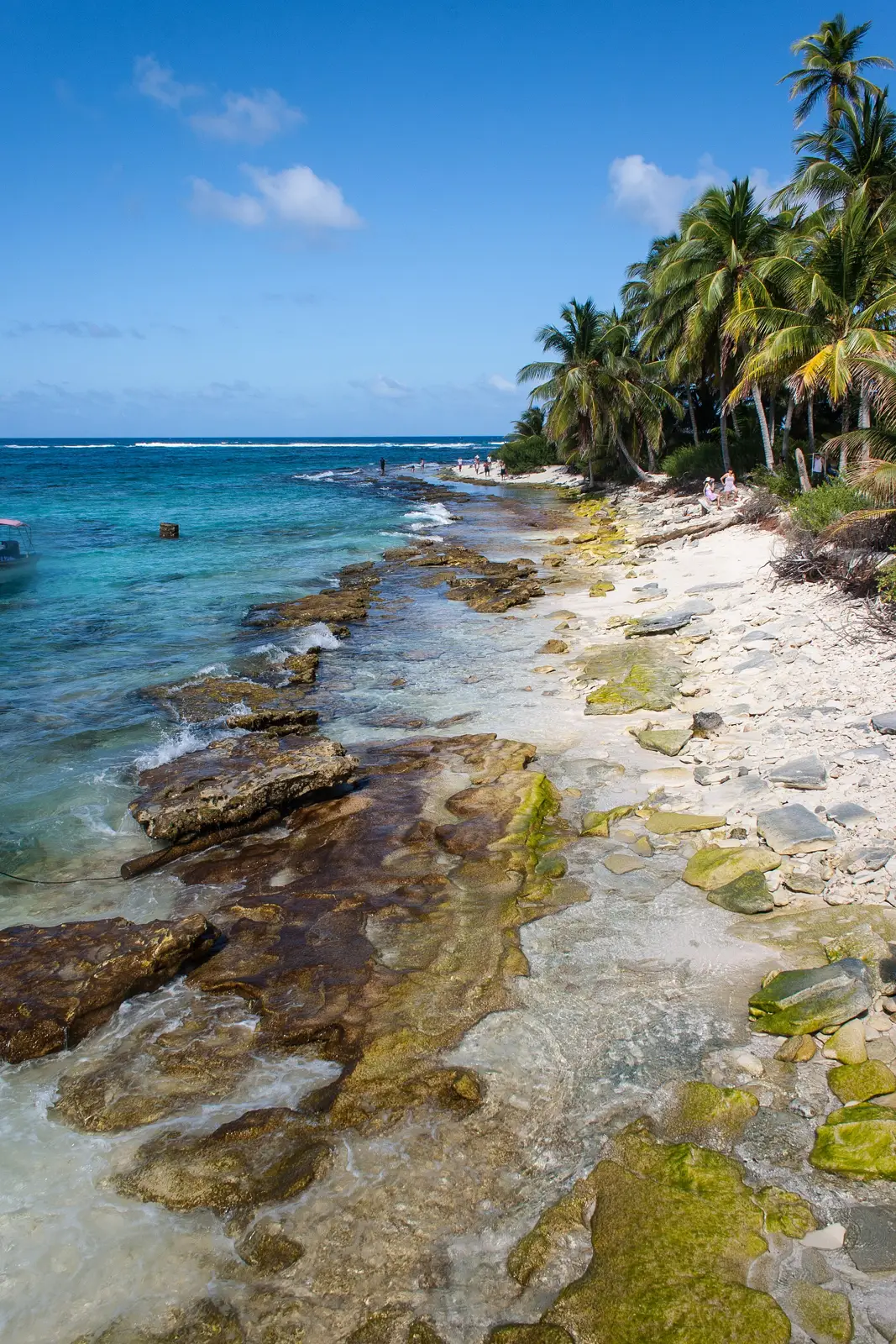
| Rocky coast and emerged reef | Dry-coral texture, swell depending on the day | Water shoes, do not break or take pieces |
Frequently asked questions
Is it safe to get close to the iguanas?
They often come closer themselves if there is food or people standing still. Keep your distance, do not touch them and do not corner them on the trail. A bite or a scratch is not “part of the experience.”
Can I take pieces of coral or shells home?
No. The park protects the islet and the reef; taking them goes against the point of the declaration, as well as the visitor rules.
Are there mangroves on Johnny Cay?
The cay in this guide is an islet of palms, beach and reef. Mangroves belong on other routes in the archipelago (for example a VIP tour that adds them), not as a forest inside these five hectares of land.
Does the reef look the same all year?
Visibility changes with swell, rain and the hour. A rough-sea day is not “fixed” with a better mask. Check the season and, that morning, whether the park opened.
Want a day at Johnny Cay that leaves the park as you found it? Message us on WhatsApp at +57 333 7694175 and we will confirm the boat, the schedule and the stops, inside Coralina’s rules.