 Johnny Cay Tour
Yes, you can swim at Johnny Cay, and that is one of the reasons to cross. You can also do it badly: the cay is not a swimming pool, it has a sheltered, buoyed side and another of rock and current, and the park is not a place to swim a full loop. This guide says where to get in, where not to, what the natural pools behind the kiosks are, and what to do if you are not a confident swimmer or the sea is rough.
📋 In brief
- Swim inside the buoys, on the side of the cay that faces San Andrés: that is the park’s swim area.
- To the north and east there is more rock and there can be current. It is not a circuit for swimmers or a shortcut to the far side.
- The natural pools behind some kiosks are shallow and sharp: go in with water shoes.
- If the swell is ugly or the Harbor Master will not let boats leave, there is no swim worth taking: the cay is not the plan that day.
Where are you allowed to swim?
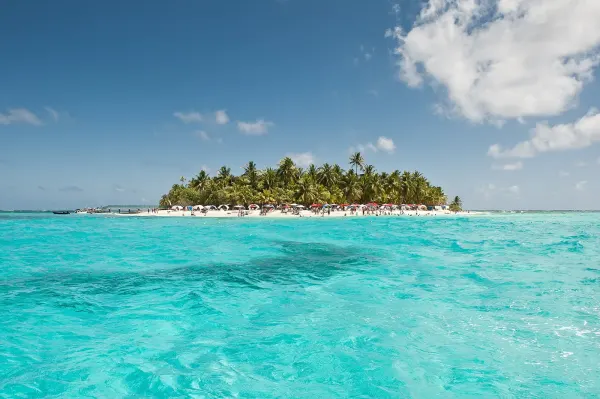
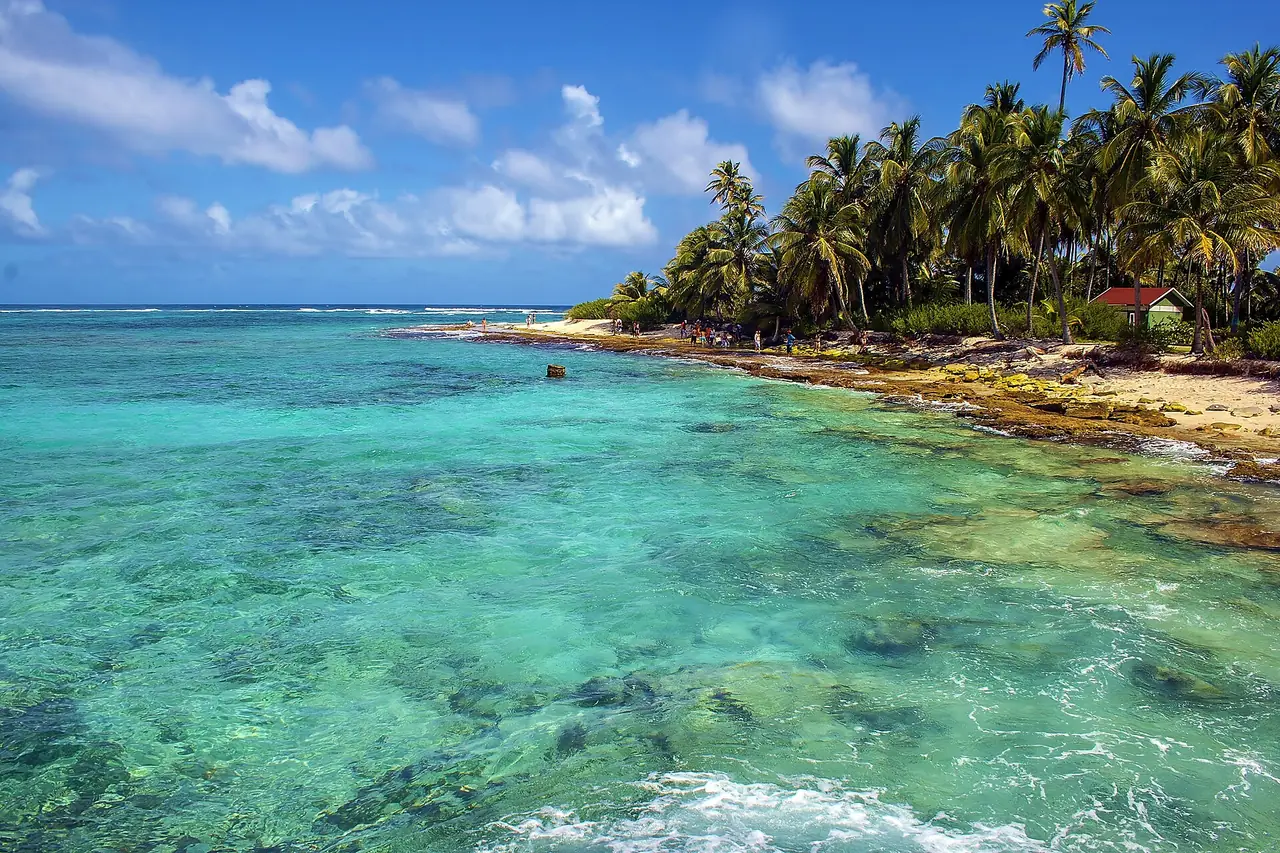
In the strip marked with buoys that faces San Andrés. There the water is usually more sheltered from the open channel, the bottom is sand and low grass, and on a clear day you see the color that shows up in photos. It is a shore swim and, if you bring a mask, a short snorkel, not a reef for an hour of fins. What you actually see—and what El Acuario adds—is in snorkeling at Johnny Cay and El Acuario.
The buoys are not decoration: they are the limit the park uses to keep swimmers where the risk is lower. Crossing them “just a little farther” is the usual way to end up on uneven bottom or in a stretch with more pull.
Are there currents? Can you swim around the cay?
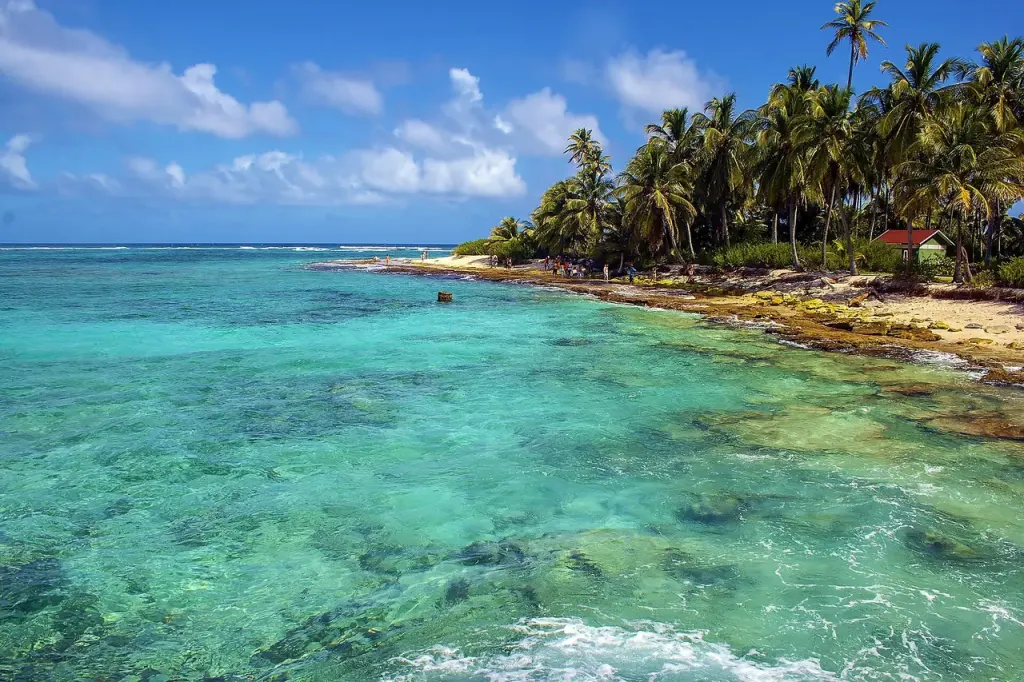
On the north and east sides the islet is rockier and more exposed. There can be current there, the bottom cuts, and there is not the same buoy line as on the main beach. You do not swim around Johnny Cay. The perimeter, about 1,500 meters, is walked on the trail in 15 to 20 minutes, in water shoes, not as a crossing. The shape of the islet and that perimeter are in the geography of Johnny Cay.
⚠️ Ojo
A heavy-swell day is not something you “negotiate” on the shore. If the Harbor Master suspends departures or the park closes, the swim is cancelled with the crossing. How to find out in time is in whether Johnny Cay is open today.
What are the natural pools behind the restaurants?
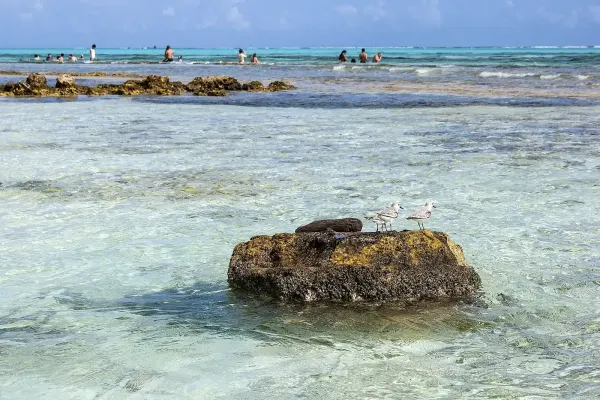
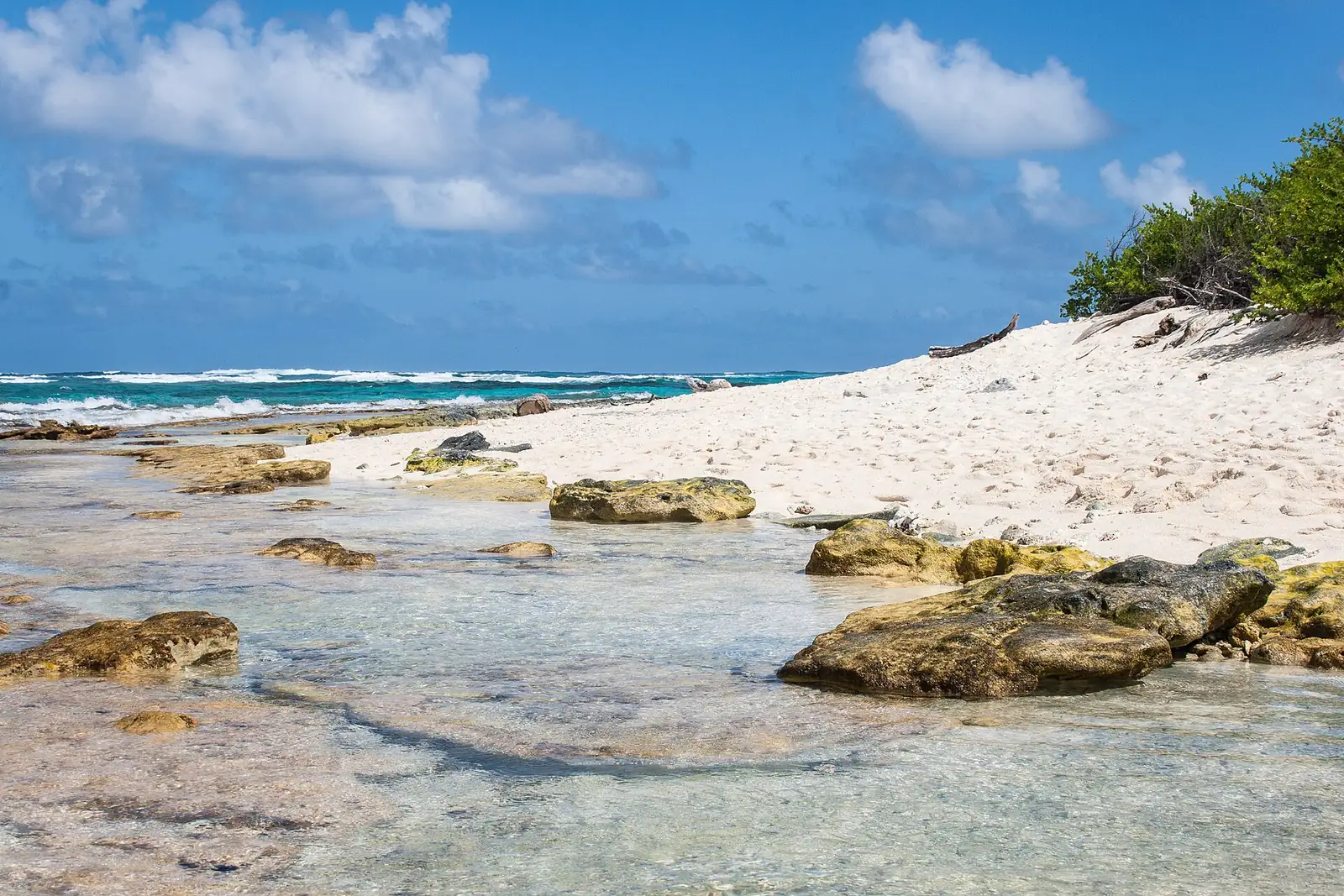
They are hollows in coral rock, in shallow water, behind some of the kiosks. They photograph well and are less deep than the buoyed area, but dry coral is sharp and the bottom is not a tiled floor. Go in with water shoes, do not run, do not sit on live rock and do not leave a child without an adult’s hand. They are not a second water park: they are part of the same islet, with the same rules against breaking or taking coral.
What if I cannot swim, I am with children, or the crossing is choppy?
You can visit the cay without being a swimmer: shaded chairs, kiosks, the trail and the shallow shore are enough for a half-day. In the water, stay where you can stand, ask for a vest if the operator has one, and do not cross the buoys “because it looks shallow.” The article for that case, and for reduced mobility, is Johnny Cay if you cannot swim or have reduced mobility. With children, the guide is Johnny Cay with kids.
The crossing lasts 10 to 15 minutes and can be choppy even though the cay looks close. If someone in the group gets seasick or should not board on rough days, say so when you book. Park hours and conduct rules—including not feeding wildlife—are in hours, rules and closures.
💡 Guide’s tip
Bring water shoes even if you only plan “a quick dip.” Between the pier ramp, the trail and the natural pools, the cay’s ground is not hotel sand all the way around.
| Area | What to do | What not to do |
|---|---|---|
| Buoyed beach, facing San Andrés | Swim and, if you want, a short snorkel | Leave the buoys or swim toward the open channel |
| Natural pools behind kiosks | Enter slowly, in water shoes | Run, sit on live coral, or leave a child alone |
| North and east rocky coast | Look, photograph, follow the trail | Dive in, swim around the cay, or “explore” with the current |
Frequently asked questions
Are there lifeguards at Johnny Cay?
Do not count on a lifeguard service as a fixed part of the park. The practical rule is this: swim in the buoyed area, stay near your group, and if you are not at ease in the water, wear a vest and stay where you can stand.
Is the water deep inside the buoys?
It changes with the tide and the exact spot, but it is a cay shoreline, not a cliff. Even so, there are holes and people around: do not treat it as a pool with a painted bottom.
Can I snorkel outside the buoys if I swim well?
That is not this guide’s recommendation. Outside there is more rock and there can be current, and the park keeps swimming inside the marked strip.
What if the day starts with a bad-weather flag?
Do not insist on the swim. Ask the operator and, if there is no departure, request a date or route change. The cay has no “secret side” that swims the same in a swell.
Want a crossing to Johnny Cay with a clear note of where you swim and when you come back? Message us on WhatsApp at +57 333 7694175. We will confirm the boat and, if you are travelling with someone who does not swim, a pace that fits.